Why Manual Etsy Research Wastes Hours
(And What To Do Instead)
The honest guide for freelancers, creators, consultants, and operators who are tired of losing hours to Etsy tabs.
If you have ever tried to qualify Etsy shops manually, you already know the truth. The platform is incredible for buyers and a time sink for anyone doing lead research. Nothing is standardized, every shop is structured differently, and the few signals you need are buried under layers of design choices and inconsistent layouts. You are stuck scrolling, clicking, copying, and guessing your way through a process that should take seconds instead of hours.
This article explains why manual Etsy research is so inefficient and the practical solution that eliminates the entire problem.
The Real Reason Etsy Research Eats Your Time
Most people assume Etsy prospecting is easy. You open a shop, skim the listings, check reviews, and decide whether the seller is worth contacting. But Etsy was never designed for this workflow, so everything that sounds simple becomes slow.
Here is why.
1. Every Etsy shop looks different
There is no standardized layout for important information.
- Some shops bury their categories.
- Some hide their top listings behind pagination.
- Some have long scrolling descriptions.
- Some show activity indicators.
- Some do not.
Your brain ends up doing unnecessary decoding on every single shop. Multiply that by dozens of stores per day and the time loss is massive.
2. Critical signals are not visible
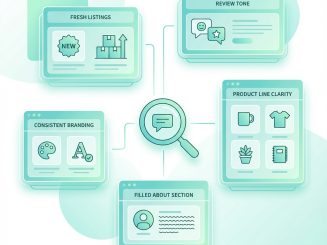
The indicators you actually care about are scattered or missing.
- Sales velocity.
- Listing freshness.
- Niche focus.
- Brand strength.
- Shop positioning.
- Responsiveness potential.
Etsy does not present any of these in a structured way. You are forced to infer patterns from partial clues, which increases the chance of bad outreach decisions or wasted contact attempts.
3. Copying data into spreadsheets creates chaos
Once you finally collect the information, you now have to:
- paste it into sheets
- rewrite inconsistent notes
- maintain your own formatting
- track shop links
- document your reasoning
And because none of the inputs are standardized, your spreadsheet becomes a messy mix of half-complete entries, vague comments, and inconsistent criteria.
This destroys your ability to prospect at scale.
4. Manual research does not scale with modern outreach
If you are doing any meaningful outreach work, you cannot afford to manually qualify dozens or hundreds of shops. The more volume you need, the worse the problem gets. You hit a ceiling fast because the bottleneck is not your skill. It is the process.
5. Most of the time you spend is not actual research
- It is friction.
- Tab switching.
- Scrolling.
- Decoding layouts.
- Rechecking stats.
- Confirming assumptions.
- Fixing spreadsheet formatting.
You waste hours, but the time spent on actual decision making is only a tiny fraction of the whole workflow.
So What Should You Do Instead
If you want to save hours every week and get consistent data you can rely on, you need a system that handles the parts Etsy was never designed for. You need structured information, fast qualification signals, and a repeatable workflow that eliminates all the noise.
The correct approach is simple.
You work on strategy. The system handles the extraction and enrichment.
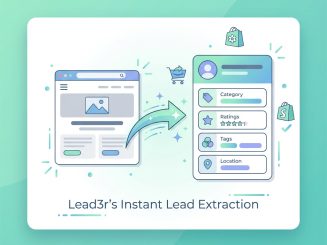
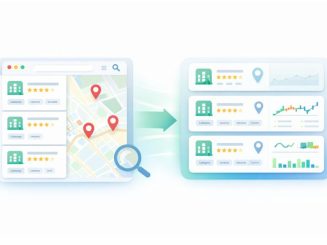
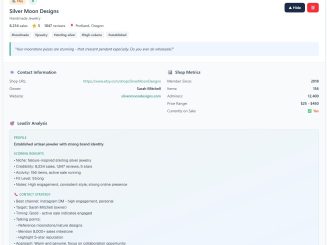
Instead of opening dozens of tabs and building your own spreadsheets, you let a tool collect key shop information instantly. You get the actual signals you need. You get consistent fields. You get an immediate understanding of the shop’s niche, strength, and potential. And you get all of it without touching a single CSV manually.
This changes everything.
You qualify faster.
You contact the right shops.
You stop doing work that does not move the needle.
Your outreach starts feeling like a system instead of a guessing game.
When you remove the friction layer, Etsy prospecting stops being painful. It becomes predictable and efficient.
The Bottom Line
Manual Etsy research wastes time because the platform was never meant to support lead evaluation. You are fighting a system that is optimized for shoppers, not for operators who need structured data and quick decision making. If you want to grow, you cannot afford to do prospecting the hard way.
The solution is to stop relying on manual work and start using a workflow that gives you clear, enriched data the moment you open a shop page. Your time is too valuable to spend scrolling through inconsistent layouts and patching spreadsheets together.
Once you work with structured information and instant qualification signals, you will never go back to manual Etsy research again.
Turn Any Etsy Shop Into a Qualified Lead in Seconds
Stop wasting time opening tabs, copying data, and guessing who is worth contacting.
Install Lead3r and extract fully enriched Etsy shop profiles in one click.
No credit card required
Latest Articles
Stay up to date with practical guides on extracting leads, qualifying prospects, and sending smarter outreach. Every post is written for freelancers, creators, and operators who want faster, clearer prospecting workflows.