What Qualified Etsy Leads Actually Look Like
Most Etsy lead generation advice stays abstract.
You are told what signals matter, how sellers should be evaluated, and why many outreach efforts fail. What is rarely shown is the actual output. Not diagrams or mockups. Real leads produced by a real workflow.
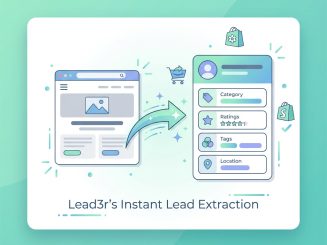
This post shows a practical example of qualifying Etsy sellers using Lead3r, including the criteria used, how those criteria were applied consistently, and what the resulting lead output looked like.
No scraping. No bulk dumping. Just structured lead research applied to real volume.
What we were trying to accomplish
When researching Etsy sellers, access to volume is rarely the problem.
Most categories contain thousands of shops. The challenge is evaluating that volume efficiently and consistently to identify which sellers are worth contacting.
In this example, Lead3r was used to process a broad pool of Etsy sellers and apply qualification criteria automatically, so the final output represented a higher-quality subset of that larger volume.
The intent was to surface sellers who:
- Are actively running a business
- Show signs of consistency and scale
- Are likely to respond to outreach
- Represent a good use of time for manual contact
This approach allows you to work with meaningful volume while letting qualification happen in the background.
Using projects to apply consistent qualification
Before reviewing any leads, a Project was created in Lead3r.
A Project defines what a good lead looks like for a specific campaign. Once selected, every lead processed through Lead3r is evaluated against the same set of parameters.
This removes guesswork and ensures that sellers are judged consistently, even when working across a large dataset.

Criteria used in this example:
For this Etsy research pass, the Project included several high-level qualification signals that are visible on public seller profiles.
These included:
- Minimum sales volume
- Minimum shop rating
- Maximum shop age
- Preferred seller locations
- Product keywords to include
- Keywords to exclude
The goal was not to narrow the list prematurely, but to score and filter a large group of sellers so attention could be focused on those most likely to be relevant.

Defining outreach style at the project level
The same Project also defined how outreach messages should be written for leads that met the criteria.
Instead of generating generic messages, the Project specified:
- Professional tone
- Moderate directness
- Medium message length
- Question-based call to action
- Clear stylistic guidelines
This ensures that outreach remains consistent and appropriate across all qualified leads.

Adding context with custom instructions
Projects also allow for short custom instructions that describe the intent of the campaign and the type of seller being targeted.
These instructions help Lead3r evaluate and message leads with the right context, rather than treating each profile as a generic record.
The resulting lead output
With the Project selected, Etsy seller profiles were evaluated against the defined criteria.
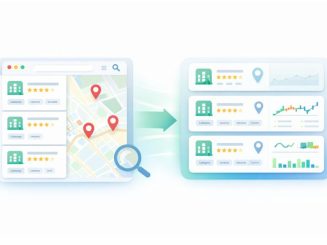
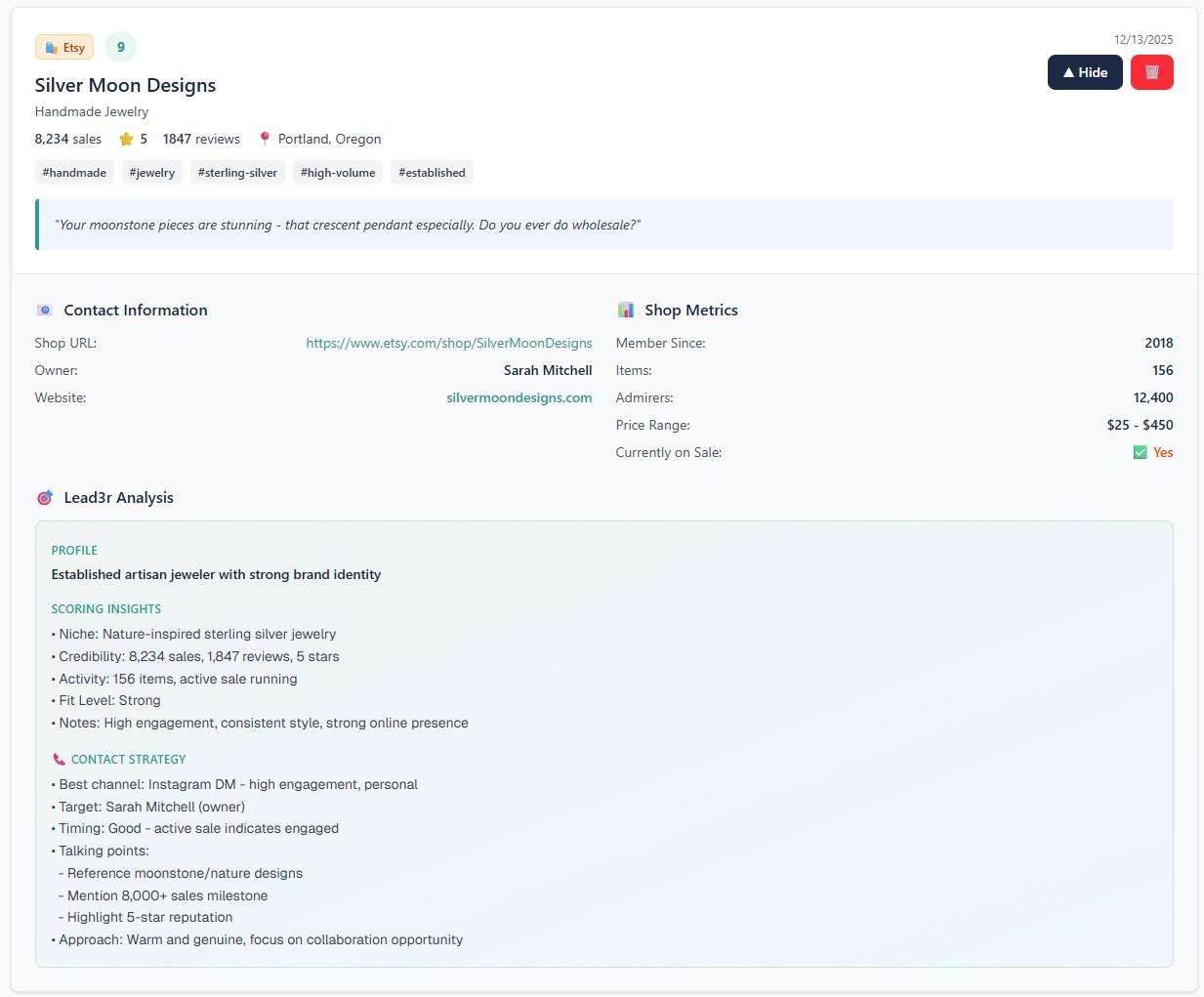
Below is a redacted view of the resulting lead list.

In this example, Lead3r surfaced 6 Etsy sellers that matched the Project parameters in less than 2 minutes.
This output reflects a qualified subset of a much larger initial pool.
Why this output is usable
This type of output answers practical questions immediately.
You can see:
- Which sellers are active versus stagnant
- Which shops show consistent review activity
- Which profiles meet your minimum standards
- Which leads are worth personal outreach
Because all leads are evaluated against the same Project criteria, the list stays focused even when working from large volumes of data.
This is qualified volume, not reduced ambition.
What this workflow avoids
It is important to be clear about what this workflow does not involve.
It does not rely on:
- Scraping Etsy at scale
- Mass exporting seller data
- Automation-driven spam
- One-size-fits-all lead lists
All data shown comes from publicly visible information and is evaluated through a human-directed research process.
The goal is relevance and consistency, not raw extraction.
Why showing real output matters
Many lead generation tools avoid showing real examples.
Once you see the output, it becomes easier to judge whether the workflow fits your use case.
Showing real, redacted results removes ambiguity. You can assess the structure, the signals, and the practicality for yourself.
That transparency is intentional.
Related reading
If you want more detail on Etsy seller qualification and the signals used here, these posts expand on the underlying approach:
- How to Qualify Etsy Shops Fast
- Etsy Lead Qualification Workflows
- Why Manual Etsy Research Wastes Hours
Final note
This example reflects how Lead3r is designed to be used.
Define your criteria once. Apply them consistently. Let qualification handle the volume so your attention can stay focused on outreach that matters.
If you want to see how the same approach works on other platforms, additional examples will follow.
Turn Any Etsy Shop Into a Qualified Lead in Seconds
Stop wasting time opening tabs, copying data, and guessing who is worth contacting.
Install Lead3r and extract fully enriched Etsy shop profiles in one click.
No credit card required
Latest Articles
Stay up to date with practical guides on extracting leads, qualifying prospects, and sending smarter outreach. Every post is written for freelancers, creators, and operators who want faster, clearer prospecting workflows.