How People Actually Find Leads on Google Maps (And What Each Method Misses)

Google Maps is one of the most commercially dense places on the internet.
If a business exists, serves customers, and wants to be found, there’s a good chance it’s on Maps. That’s why Google Maps shows up in almost every lead generation workflow at some point — whether you’re an agency, consultant, freelancer, or founder doing outreach yourself.
What’s interesting isn’t whether people use Google Maps to find leads. It’s how they do it — and what each approach quietly misses.
There’s no single “right” way to prospect on Google Maps. There are tradeoffs. And understanding those tradeoffs is usually the difference between outreach that gets ignored and outreach that converts.
The Manual Browsing Approach
This is how most people start.
You search a category. You open listings one by one. You scan reviews, look at photos, check the website, maybe note the rating and location, then move on.
Manual browsing has one big advantage: control.
You see the business exactly as a customer would. You notice nuance. You can trust what you’re looking at because you’re the one looking at it.
But the downsides show up quickly.
Manual research doesn’t scale well. After the tenth or twentieth listing, context starts to blur. You forget which businesses felt promising and which didn’t. Copying details into spreadsheets is slow, inconsistent, and mentally draining. The signal you noticed while browsing often gets lost the moment you paste raw data somewhere else
.
Manual browsing is accurate, but it’s fragile. It relies entirely on memory and discipline to stay useful.
Scraping and Bulk Extraction Tools
At the other end of the spectrum are scraping tools.
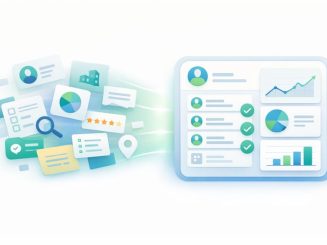
These tools promise speed. You enter a location and category, hit a button, and suddenly you have hundreds or thousands of businesses exported into a file.
For some use cases, that speed matters. If you’re doing broad market research or feeding large datasets into another system, scraping can feel efficient.
But scraping introduces its own problems.
Data pulled in bulk is usually shallow. You get names, addresses, maybe ratings — but very little context. You don’t know which businesses are actually active, which ones care about their presence, or which ones align with what you’re offering.
There’s also fragility. Layout changes break scrapers. Rate limits appear. Tools stop working without warning. Even when they do work, you often spend more time cleaning and filtering the data than you saved by scraping it in the first place.
Scraping optimizes for volume, not judgment.
API-Driven and Data Provider Solutions
Some teams bypass Maps entirely and buy data from providers or APIs.
This can be useful if you need standardized datasets or historical information. APIs are predictable, structured, and designed for automation.
The tradeoff is distance.
API data is abstracted from reality. It doesn’t reflect how a business presents itself right now. It doesn’t show recent activity, visual cues, or qualitative signals that matter for outreach.
You gain structure, but you lose immediacy.
The Hybrid, Human-Triggered Approach
Between manual browsing and full automation sits a quieter middle ground.
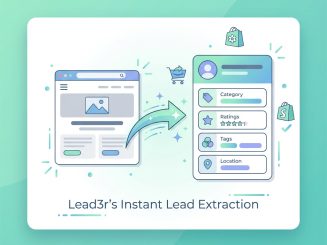
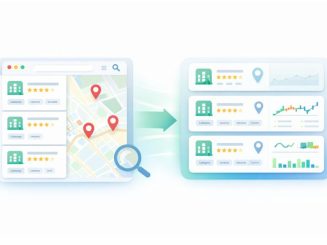
In this approach, you still browse Google Maps normally. You still decide which listings are worth opening. But instead of copying information manually or scraping everything blindly, you extract structured data only from the businesses you’ve already decided are interesting.
The workflow stays human, but the output becomes consistent.
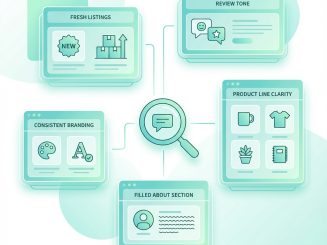
You preserve context. You capture signals while they’re fresh. You reduce the cognitive load of remembering what you saw five listings ago. And you avoid pulling in businesses you would never contact anyway.
This approach doesn’t try to replace judgment. It supports it.
For many teams, especially those doing targeted outreach, that balance matters more than raw speed.
What Actually Gets Missed Most Often
Across all these approaches, the same things tend to fall through the cracks.
Context is lost when data is flattened too early.
Signals that matter in the moment disappear once everything looks like a row in a spreadsheet.
Time is wasted qualifying leads after extraction instead of during research.
Most workflows fail not because they don’t collect enough data, but because they don’t preserve the reasoning behind why a lead looked promising in the first place.
Choosing an Approach Based on How You Sell
The best way to find leads on Google Maps depends less on the tool and more on your sales motion.
If you rely on very high volume and broad outreach, speed and scale may matter more than nuance.
If you sell higher-touch services, niche offerings, or founder-to-founder solutions, context usually beats volume.
If you’re somewhere in between, a hybrid approach often gives you the best of both worlds.
None of these paths are wrong. They’re just optimized for different outcomes.
The Real Advantage Is How the Decision Gets Made
Every lead generation approach eventually comes down to the same question:
“Is this business worth contacting?”
The difference is how efficiently and consistently you can answer it.
When everything stays in your head, judgment gets fuzzy.
When everything is scraped in bulk, context disappears.
When data isn’t structured, decisions slow down or get deferred.
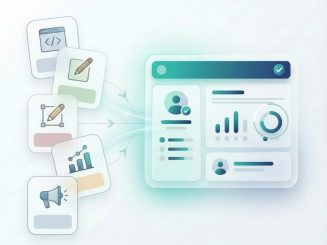
The advantage comes from having a workflow that captures the signals you’re already looking at, preserves them in a usable format, and lets you make that decision with confidence — repeatedly.
That’s where tools matter.
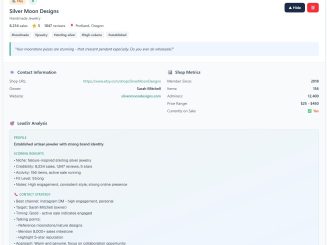
Not because they replace judgment, but because they support it at scale. When the information you noticed while browsing is structured immediately and enriched with context, outreach stops being guesswork and starts being intentional.
Better tools don’t change what you decide.
They change how reliably you can decide it — over and over again.
Final Thought
Google Maps isn’t just a list of businesses. It’s a live snapshot of who’s active, visible, and competing for attention.
How you extract leads from it matters less than how well you understand what you’re seeing.
When your process preserves context instead of flattening it, lead generation stops feeling like guesswork — and starts feeling intentional.
Turn Google Maps Browsing Into Qualified Leads
Stop losing context after every tab. Extract structured business data, capture the signals you care about, and decide who’s worth contacting — in one click.
Install Lead3r and extract fully enriched Google Maps data in one click.
No credit card required
Latest Articles
Stay up to date with practical guides on extracting leads, qualifying prospects, and sending smarter outreach. Every post is written for freelancers, creators, and operators who want faster, clearer prospecting workflows.